


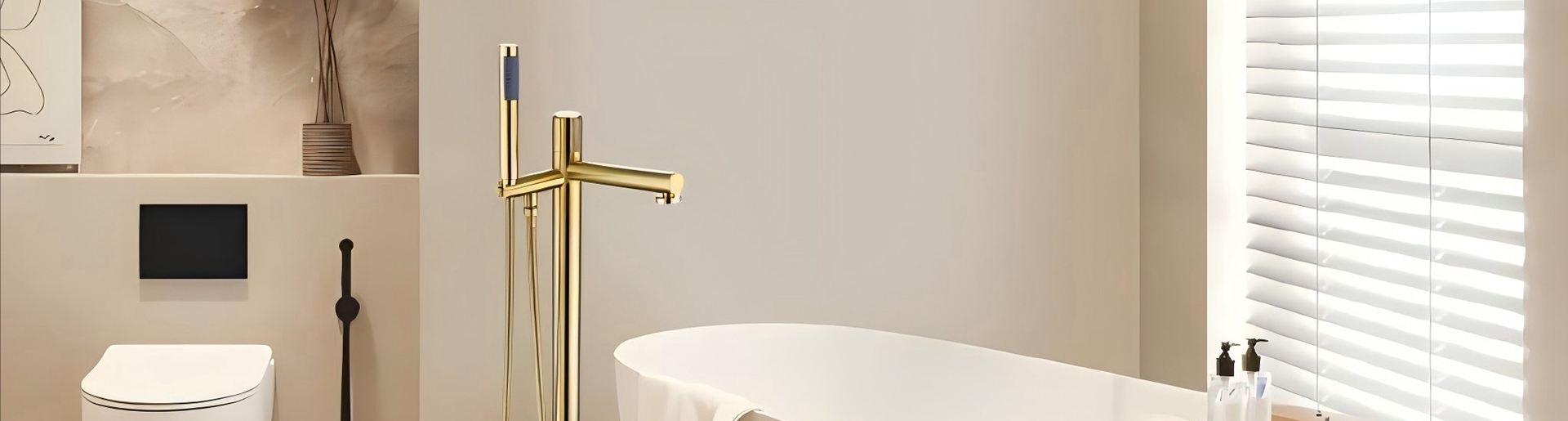
How Far Should a Bathroom Faucet Reach?
Choosing the correct reach for a Bathroom Faucet is one of the most important factors in ensuring both comfort and functionality in a bathroom. The reach, which refers to the horizontal distance from the center of the faucet spout to where the water stream lands in the sink, can directly influence water flow control, splash reduction, and overall user experience.
Table of Contents
Understanding Faucet Reach
Faucet reach is not the same as faucet height. It determines how far the spout extends over the sink basin. A faucet that reaches too short may cause water to hit the back of the sink or even splash onto the countertop. On the other hand, an overly long reach can lead to awkward positioning, where the water lands too close to the front edge of the basin. Both extremes reduce efficiency and cleanliness, making the correct measurement crucial for daily use.
The ideal reach depends on the sink shape, depth, and mounting position. For example, a shallow vessel sink typically requires a faucet with a longer reach, while a deep under-mount basin pairs better with a shorter reach to prevent splashing.
Standard Faucet Reach Guidelines
In most residential bathrooms, the standard faucet reach falls between 5 to 6 inches. This range ensures the water stream lands comfortably in the center of the basin. However, this measurement can vary depending on sink type and mounting method. Wall-mounted and deck-mounted faucets follow different spacing requirements.
| Faucet Type | Average Reach Range | Typical Use Case |
|---|---|---|
| Deck-mounted faucet | 5 – 6 inches | Standard countertop sink installation |
| Wall-mounted faucet | 7 – 9 inches | Vessel sinks or modern minimalist designs |
| Vessel faucet | 6 – 8 inches | Bowl-style sinks with elevated basins |
These measurements serve as general guidelines. When designing or renovating a bathroom, it is always better to confirm the specific sink and countertop configuration before selecting the faucet model.
Balancing Reach with Sink Design
Every sink design affects the faucet’s ideal reach. A rectangular sink with sharp corners may require a slightly longer spout to ensure the water lands in the center, while an oval or round sink allows more flexibility. The goal is to make sure that water flows naturally into the drain without excessive splashing or awkward hand positioning.
In modern bathrooms, under-mount sinks are increasingly common. These sinks sit below the countertop, and their recessed position often calls for a faucet with a medium reach, typically between 5.5 to 6.5 inches. Conversely, above-counter vessel sinks, which stand higher than the counter surface, need taller and longer faucets with reaches of 7 inches or more to maintain ergonomic comfort.
Impact of Faucet Reach on Usability
A well-measured faucet reach contributes not only to visual balance but also to functional ease. A faucet with a correct projection:
Prevents water from splashing beyond the basin edge.
Allows comfortable handwashing and brushing.
Aligns the water stream precisely with the drain position.
Enhances cleaning convenience by ensuring adequate clearance.
Incorrect reach can cause frequent splashes, water pooling, and reduced durability for countertop materials. For high-use family bathrooms or commercial settings, a properly aligned faucet reach reduces maintenance effort and extends the life of fixtures.
Wall-Mounted Faucets: Special Considerations
Wall-mounted faucets are becoming a popular choice for minimalist and modern bathrooms. Their reach, however, must be carefully planned since it cannot be adjusted after installation. The typical wall-mounted faucet should reach at least 7 inches to project water into the center of the sink. For large vessel sinks, extending to 9 inches may provide better functionality.
When installing, ensure the spout height and reach are measured in tandem. The spout should extend sufficiently to clear the basin rim, and the water flow should angle toward the drain to avoid back splashes.
Matching Faucet Reach with Countertop Depth
Countertop dimensions also influence faucet reach. Shallow countertops may limit faucet length, while deeper vanities require spouts with extended reach. Maintaining a balanced ratio between the sink center and countertop depth ensures ergonomic comfort and prevents misalignment.
| Countertop Depth | Recommended Faucet Reach | Design Recommendation |
|---|---|---|
| 18 inches | 5 inches | Ideal for compact vanities |
| 20 inches | 6 inches | Standard for most bathrooms |
| 22+ inches | 7 inches or more | Suitable for wall-mount faucets |
This proportion helps preserve both aesthetics and usability, ensuring the faucet complements the overall layout.
Aesthetic Balance and Style
While functionality is essential, aesthetic proportion plays an equally important role. A faucet that extends too far can visually overwhelm the sink, while a short one can make the design appear incomplete. Sleek and proportionate spout reach enhances the bathroom’s visual harmony. Matching finishes, symmetry, and spout curvature all contribute to a cohesive style.
Modern bathroom trends favor streamlined silhouettes, where faucet reach aligns naturally with the basin’s curvature. When paired with contemporary sinks, a 6-inch reach usually offers both elegance and comfort.
Final Recommendations
Selecting the right faucet reach begins with understanding the sink’s geometry and the user’s daily habits. Always measure the distance from the back wall or faucet mounting point to the sink’s drain center, then choose a faucet that allows the water stream to land comfortably in the middle. Ideally, the reach should not exceed the midpoint of the basin nor fall short of one-third of its depth.
In summary, for most bathroom setups:
Standard under-mount sinks: 5–6 inches reach
Vessel sinks: 7–9 inches reach
Compact vanities: 4.5–5 inches reach
A well-chosen reach enhances comfort, prevents splashing, and complements the overall design, ensuring that both aesthetics and practicality coexist beautifully in your bathroom.