


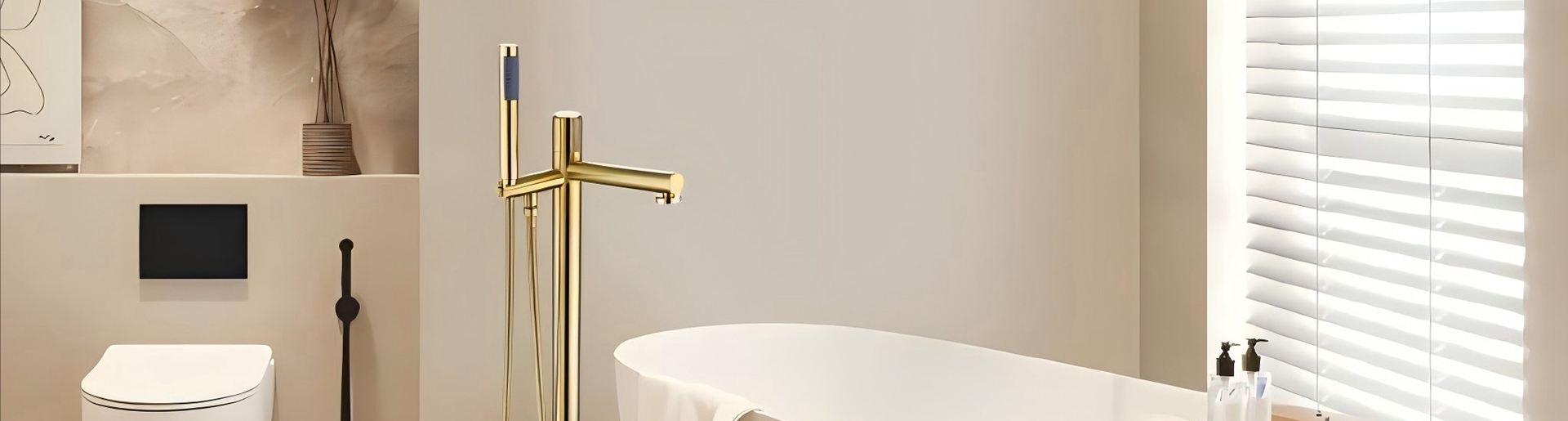
How to Install a Touchless Bathroom Faucet?
The Bathroom Faucet industry is undergoing a significant transformation with touchless technology emerging as a dominant trend in both residential and commercial applications. As a faucet manufacturer with over twenty years of experience serving global markets, we have observed a consistent increase in demand for touchless solutions that combine hygiene, water conservation, and modern design. These sensor-activated faucets not only offer convenience but also align with health-conscious trends and sustainability goals.
From a manufacturing perspective, producing high-quality touchless faucets requires specialized expertise in electronics integration, reliable sensor technology, and durable mechanical components. At our integrated production facilities—including dedicated plating, painting, and assembly operations—we ensure each touchless faucet undergoes rigorous testing for flow rate, sensor accuracy, and durability before shipment. This comprehensive quality control approach results in products that meet international standards and deliver consistent performance in diverse installation environments.
Table of Contents
- Pre-Installation Planning: Essential Considerations
- Step-by-Step Installation Process
- Troubleshooting Common Installation Challenges
- Quality Manufacturing: The Foundation of Reliable Touchless Faucets
- Maintenance Guidelines for Long-Term Performance
- Conclusion: Elevating Installation Excellence with Quality Products
Pre-Installation Planning: Essential Considerations
Technical Assessment and Site Preparation
Before beginning any touchless faucet installation, a thorough assessment of the installation site is crucial. Determine the power source for your sensor faucet—most models are available in battery-operated versions, hardwired electrical connections, or hybrid systems. Battery-powered units typically require 4 to 6 AA or C-cell batteries, offering installation flexibility but requiring periodic battery replacement, usually every 1 to 2 years based on usage patterns.
Examine your sink configuration and countertop material, as these factors influence the installation approach. Touchless faucets require specific clearance dimensions for the sensor's detection field, typically ranging from 4 to 10 inches from the sensor to the faucet spout. Additionally, verify that your plumbing connections are compatible—most modern touchless faucets use standard ½-inch or ¾-inch supply lines.
Table: Common Touchless Faucet Configuration Requirements
| Specification | Typical Range | Considerations |
|---|---|---|
| Power Source | Battery (4-6 AA/C cells) or Hardwired (12V DC) | Battery offers easier installation; hardwired provides consistent power |
| Sensor Detection Range | 4-10 inches | Affects optimal positioning for reliable activation |
| Water Pressure | 20-100 PSI | Most models include pressure regulation features |
| Installation Clearance | 3-5 inches below countertop | Varies based on sensor housing design |
| Temperature Control | Single-handle or dual-handle options | Dual-handle requires separate hot/cold supply lines |
Essential Tools and Materials
Professional installers should gather these essential tools before beginning: adjustable wrench, basin wrench, tubing cutter, plumber's putty or silicone sealant, Teflon tape, voltage tester (for hardwired models), screwdrivers (flathead and Phillips), and safety equipment including gloves and eye protection. For battery-powered models, ensure you have the appropriate quantity and type of fresh batteries.
Step-by-Step Installation Process
1. Removing the Existing Faucet
Begin by shutting off the water supply valves located beneath the sink. Open the existing faucet to drain any remaining water from the lines. Using a basin wrench, disconnect the supply lines from the faucet tailpieces. Remove the mounting nuts securing the old faucet to the sink or countertop. Carefully lift the old faucet assembly and clean the mounting area thoroughly, removing any old putty, mineral deposits, or debris that might interfere with the new installation.
2. Preparing the New Touchless Faucet
Unpack all components of your new touchless faucet and verify everything is present according to the manufacturer's specifications. At our manufacturing facility, each touchless faucet undergoes multiple quality checks before packaging, but it's prudent to confirm all parts are undamaged. Pre-assemble any components that are designed to be connected before installation, such as sensor housings to faucet bodies, following the provided instructions precisely.
For models with separate sensor units, position the sensor according to the recommended placement guidelines—typically facing downward at an angle that covers the anticipated hand placement area. Test the sensor's detection pattern without mounting it permanently to ensure it will activate properly in the intended installation location.
3. Mounting the Faucet Body
Apply a continuous bead of plumber's putty or silicone sealant around the base of the new faucet (unless the manufacturer specifies an alternative method or provides a gasket). Insert the faucet tailpieces through the mounting holes in the sink or countertop. From beneath the sink, install the provided washers and mounting nuts, tightening them evenly to create a secure seal without over-tightening, which could damage the faucet body or countertop material.
Connect the water supply lines to the faucet tailpieces, using Teflon tape on threaded connections to ensure leak-free joints. For models with temperature control handles, connect both hot and cold supply lines to the appropriate inlets, typically marked with color coding or symbols.
4. Installing the Sensor and Electronic Components
For battery-operated models, insert fresh batteries into the designated compartment, paying attention to proper polarity orientation. For hardwired electrical connections, route the low-voltage wiring to your power source, typically a transformer plugged into a nearby grounded outlet or direct wiring to a junction box. Use appropriate wire connectors and ensure all electrical connections comply with local building codes.
Mount the sensor unit according to the manufacturer's specified position and orientation. Most sensors should be positioned to detect motion in the area directly beneath the faucet spout without being obstructed by the sink bowl or other objects. Secure the sensor housing using the provided mounting hardware, ensuring it is firmly attached but not overly tightened.
5. System Testing and Calibration
Turn the water supply valves back on gradually, checking all connections for leaks. Activate the faucet by passing your hand through the sensor detection zone. Observe the water flow pattern, temperature (if applicable), and automatic shut-off timing. Most touchless faucets include adjustable settings for sensor sensitivity, water flow duration, and in some models, maximum flow rate.
Calibrate these settings according to the intended usage environment. For high-traffic commercial installations, shorter flow durations may conserve water, while residential settings might benefit from slightly longer activation periods. Test the sensor from various angles and hand positions to ensure consistent, reliable activation across the intended usage area.
Troubleshooting Common Installation Challenges
Even with careful installation, touchless faucets may occasionally present operational issues. The most frequent post-installation challenges include inconsistent sensor activation, water temperature irregularities, and unexpected water flow. These problems typically stem from installation factors rather than product defects.
Inconsistent sensor response often relates to positioning issues or power supply problems. Verify that the sensor is clean, properly angled, and unobstructed by nearby objects. For battery-powered models, test with fresh batteries even if the installed batteries are new, as some manufacturers ship products with demonstration batteries not intended for long-term use. For hardwired electrical models, use a voltage tester to confirm adequate power supply at the transformer output terminals.
Water temperature issues in models with temperature control usually trace back to supply line connections. Confirm that hot and cold lines are connected to the correct inlets on the faucet body. If water fails to flow despite proper sensor activation, check the aerator for manufacturing debris or sediment blockage—a common issue in new plumbing installations. Remove the aerator and flush the faucet briefly before reinstalling the cleaned aerator.
Quality Manufacturing: The Foundation of Reliable Touchless Faucets
Integrated Production Advantages
The reliability of any touchless faucet begins with manufacturing excellence. As an integrated manufacturer with complete control over plating, painting, component production, and final assembly, we implement quality checks at each production stage rather than just at final inspection. This vertical integration approach allows for consistent material quality, precise electronic component integration, and thorough performance validation before products reach installation professionals.
Our dedicated testing facilities evaluate each touchless faucet for critical performance metrics including sensor accuracy (typically exceeding 98% detection reliability), water flow consistency, valve durability (tested to 500,000 cycles minimum), and finish resilience. This comprehensive validation process ensures that installation professionals receive products designed to perform reliably in diverse environments, from residential bathrooms to high-traffic commercial facilities.
Technical Support and Customization Capabilities
Professional faucet manufacturers supporting installation experts offer more than just products—they provide technical resources, installation guidance, and customization options. With decades of experience serving international markets, we develop touchless faucets that accommodate regional variations in water pressure, plumbing standards, and design preferences. This global perspective informs product designs that install efficiently in diverse contexts while meeting localized performance expectations.
For specialized applications, manufacturers with integrated production capabilities can develop customized solutions addressing unique installation challenges, specific design requirements, or particular performance parameters. Whether adjusting sensor sensitivity for unusual sink configurations, modifying finish options to match specific design schemes, or creating specialized mounting solutions for non-standard installations, this flexibility ensures installation professionals can address client needs without compromising on quality or reliability.
Maintenance Guidelines for Long-Term Performance
Proper installation establishes the foundation for touchless faucet performance, but appropriate maintenance ensures long-term reliability. Regular cleaning of sensor lenses with soft, non-abrasive materials prevents false activations or detection failures. For battery-operated models, establish a preventive replacement schedule based on usage patterns—commercial installations typically require battery replacement every 6 to 12 months, while residential applications may extend to 18-24 months.
Periodically inspect all visible connections for moisture accumulation or mineral deposits that might indicate developing leaks. Clean aerators and flow regulators every 3 to 6 months to maintain consistent water flow and sensor response. For hardwired electrical models, periodically verify transformer operation and electrical connections, particularly in environments with vibration or temperature fluctuations that might affect connections over time.
Conclusion: Elevating Installation Excellence with Quality Products
Successful touchless bathroom faucet installation combines meticulous preparation, proper technique, and quality products designed with the installer in mind. As sensor technology continues advancing, installation professionals who master these systems position themselves advantageously in a growing market segment. By selecting touchless faucets from manufacturers with integrated production capabilities, rigorous testing protocols, and technical support resources, installers ensure satisfied clients and reduced callbacks for performance issues.
The future of bathroom design increasingly incorporates intelligent, hygienic, and water-efficient solutions. Touchless faucets represent a significant component of this evolution, blending practical benefits with aesthetic appeal. With proper installation techniques and quality products, these innovative fixtures deliver lasting performance that meets the evolving expectations of today's bathroom environments while conserving precious water resources—a combination that benefits users, installers, and our shared environment.