


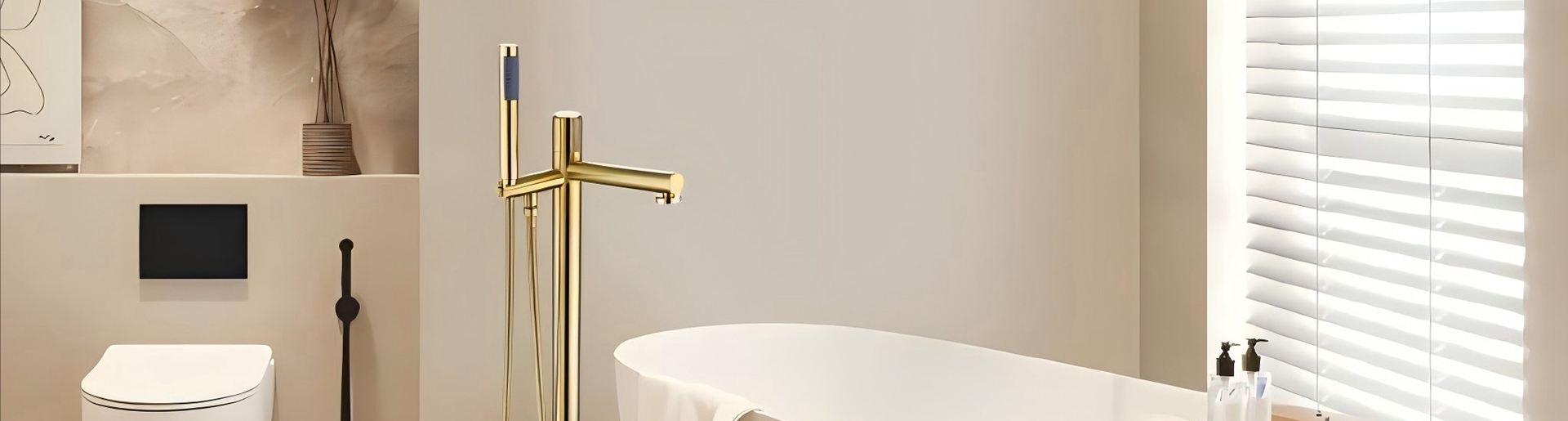
How to Choose a Bathroom Faucet?
Choosing the right Bathroom Faucet is a critical decision that impacts the functionality, aesthetics, and long-term value of a space. This guide provides essential insights into the key considerations for selecting bathroom faucets that deliver both performance and design excellence.
Table of Contents
Key Selection Criteria for Bathroom Faucets
Several interconnected factors determine the success of a faucet installation. The best choices emerge when these factors are carefully balanced against a project's specific requirements.
Functionality and Practical Design
A faucet must perform reliably over time. Core functional considerations include the spout reach, which should be sufficient to direct water flow properly into the basin, and the handle type. Lever handles are often easier for people of all ages to operate with minimal hand strength. The flow rate, often regulated to 1.2 or 1.5 gallons per minute in many regions, must deliver adequate water while conserving resources. Internal mechanisms are paramount; ceramic disc cartridges are widely recognized for durability and consistent leak-free performance, often lasting through hundreds of thousands of cycles.
Aesthetic and Style Cohesion
The faucet should serve as a cohesive element of the bathroom's overall design language. It must complement the style of the basin, cabinetry, and other hardware. Primary styles include:
Modern/Contemporary: Characterized by clean lines, geometric shapes, and minimal ornamentation. Finishes like brushed nickel, matte black, and chrome are common.
Traditional/Classic: Featuring elegant curves, intricate cross handles, and detailed accents. Polished chrome, oil-rubbed bronze, and polished brass are typical finishes.
Transitional: A versatile blend of classic and contemporary elements, offering broad compatibility with various design schemes.
Beyond style, the faucet’s finish is crucial for both appearance and longevity. Different materials and plating layers offer varying levels of resistance to corrosion, tarnishing, and water spots, which is vital for a humid bathroom environment.
Installation and Configuration
The faucet's design must match the sink or vanity's pre-drilled configuration. The standard options are:
Center-Set: A compact design where spout and handles are mounted on a single base, typically for sinks with one or three holes spaced 4 inches apart.
Widespread: The spout and two separate handles are installed independently, usually requiring three holes with a flexible spread (often 6 to 16 inches apart). This allows for more customization and a grander look.
Wall-Mount: The faucet is installed directly into the wall above the sink, creating a sleek, floating appearance that simplifies countertop cleaning.
It is essential to verify the faucet’s specifications against the sink's hole configuration and the available space behind the vanity or wall to ensure a feasible installation.
Material Quality and Manufacturing Excellence: The Foundation of Durability
The longevity and performance of a faucet are fundamentally determined by the materials used and the precision of its manufacturing process. Leading manufacturers invest in fully integrated production, controlling every step from raw material to final assembly to ensure uncompromising quality.
The Importance of Solid Brass Construction
High-quality faucets use solid brass for critical internal and external components. Brass is preferred because it is highly resistant to corrosion and can withstand the constant presence of water and varying pH levels. Faucets made with durable brass bodies consistently outperform those with plastic or inferior metal housings. The material quality directly influences the product's lifespan, leak resistance, and overall reliability.
The Science of Surface Finishes
A faucet's finish is more than just color; it is a multi-layered protective system. The process typically begins with a copper plating layer for excellent adhesion, followed by nickel plating for hardness and a final layer of chrome or PVD (Physical Vapor Deposition) color. The thickness and consistency of these plating layers are what prevent tarnishing, scratching, and corrosion. For example, a high-quality Chrome finish requires precise electroplating to achieve its signature mirror-like shine and durability. Advanced PVD finishes, such as matte black, gold, or brushed nickel, offer even greater resistance to wear, chemicals, and fading, often backed by extensive warranty periods because of their proven performance.
Advanced Manufacturing for Guaranteed Performance
Selecting a supplier with a vertically integrated manufacturing infrastructure offers significant advantages in quality control, customization, and supply chain reliability.
Advantages of Integrated Production
A manufacturer with in-house facilities for casting, machining, electroplating, and assembly maintains strict oversight at every production stage. This control allows for:
Consistent Quality Standards: Every batch of products meets the same high specifications.
Efficient Customization: Modifications to finish, design, or packaging can be implemented quickly without relying on multiple external vendors.
Improved Lead Times: A streamlined process from raw material to finished good reduces production delays.
For instance, a manufacturer operating its own plating factory and testing lab can ensure each faucet passes rigorous flow rate, durability, and leak tests before shipment. Data from industry practices show that such in-process quality control can identify and rectify over 95% of potential defects before final assembly, significantly reducing field failure rates.
The Role of Rigorous Quality Assurance
Proven quality control is non-negotiable. A comprehensive QA protocol involves multiple checkpoints:
| Quality Control Stage | Key Actions and Tests |
|---|---|
| Incoming Material Inspection | Verification of brass alloy composition, valve ceramic quality, and accessory specifications. |
| In-Process Production Checks | Dimensional accuracy of castings, surface smoothness, and integrity of seal assemblies. |
| Pre-Assembly Plating Inspection | Adhesion tests, thickness measurement of plating layers, and visual checks for imperfections. |
| Final Performance Testing | Flow rate and pressure tests, leak tests under air and water pressure, and functional cycle tests for handles and moving parts. |
Manufacturers with a dedicated QC team and professional testing equipment, including computerized flow testers and salt spray chambers for corrosion testing, provide tangible evidence of product reliability.
Why Partner with AIDIER for Your Bathroom Faucet Needs
When sourcing bathroom faucets, partnering with an experienced and capable manufacturer is the most important decision you can make. AIDIER stands out as a premier faucet manufacturer with over 14 years of dedicated expertise in designing and producing faucets for global markets, with a strong focus on North America.
Our strength is built on a foundation of Integrated Manufacturing. We own and operate comprehensive production facilities, including dedicated plating and painting factories, which allows us to manage the entire manufacturing process. This vertical integration gives us direct control over quality, cost, and production schedules, enabling us to offer true one-stop manufacturing solutions and reliable lead times.
We bring substantial Global Expertise to every project. With decades of experience serving international clients, we understand the diverse certification requirements, design preferences, and functional needs of markets worldwide. This expertise allows us to provide effective, customized solutions and product adaptations to meet specific project demands.
Our Complete Product Line ensures we have the right faucet for any application. We offer a full range of styles—from modern single-hole designs to classic widespread sets—in a variety of popular and durable finishes. This breadth allows you to source multiple product categories from a single, trusted partner, simplifying your supply chain.
Every product we ship is backed by our Proven Quality Control system. Our professional QC team is involved at each production process, and all finished products undergo final testing with professional equipment. We conduct tests for flow rate, air and water tightness, and durability, ensuring that only products meeting our strict performance standards are approved for shipment. Our commitment is to deliver consistent excellence, providing you with faucets that offer lasting performance and value for your projects.