


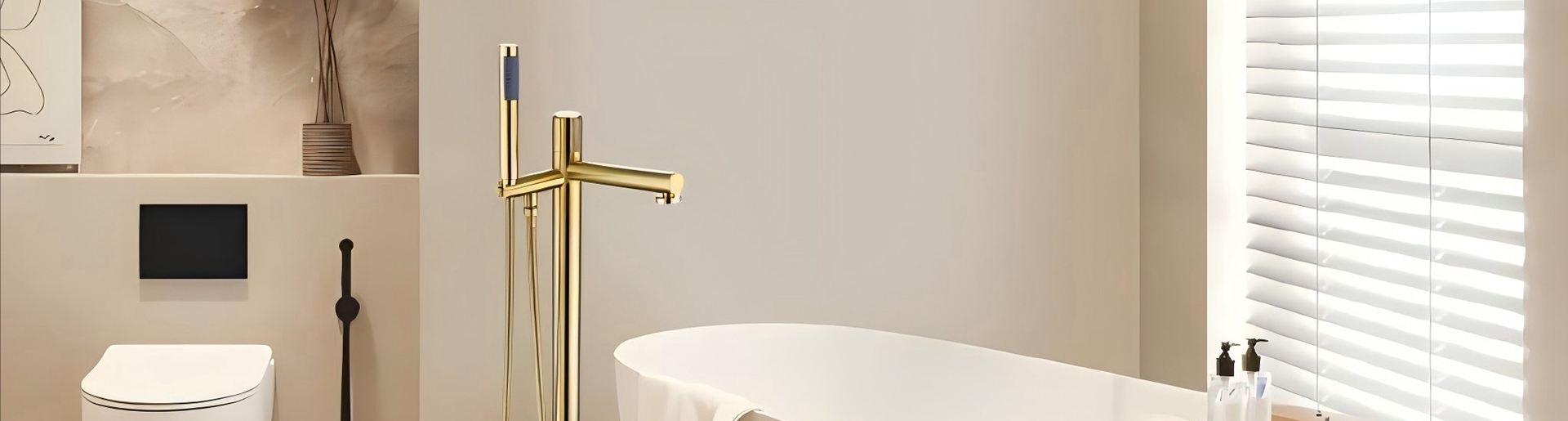
How to Choose the Right Bathroom Faucet?
Choosing a Bathroom Faucet is a specification decision, not a decoration decision. The right model improves daily user experience, reduces call-backs after installation, and lowers long-term water and maintenance costs. From a manufacturer’s viewpoint, the best results come from aligning four things early: installation geometry, water performance targets, compliance requirements, and serviceability.
Table of Contents
- Start with the installation facts you cannot change
- Define the performance target: water flow and pressure reality
- Treat compliance as a selection filter, not a checklist at the end
- Choose the internal structure that controls lifetime performance
- Pick material and finish for the environment, not just the catalog photo
- Decide if you need a functional upgrade, not just a different shape
- Use a short spec table to prevent misunderstandings
- Verify what happens after the faucet arrives: packaging, spares, and QC consistency
- Final selection checklist
Start with the installation facts you cannot change
Before comparing styles, lock down the non-negotiables:
Mounting type
Deck-mount on the sink or countertop
Wall-mount, less common, higher rough-in accuracy required
Hole configuration
Single-hole
Centerset, typically 4 inch spread
Widespread, typically 8 inch to 16 inch adjustable
Spout reach and height
Match the spout reach to the bowl center to avoid splashing
Ensure handle clearance from backsplash, mirror, or wall trim
Drain and pop-up compatibility
Confirm if your sink uses overflow, non-overflow, or a special drain geometry
A frequent mismatch in projects is choosing a high-arc spout for a shallow basin, then fighting splash and water marks forever. Geometry comes first.
Define the performance target: water flow and pressure reality
Water efficiency is increasingly part of tender requirements and building standards. For lavatory faucets, the U.S. baseline commonly referenced is 2.2 gallons per minute, while WaterSense-labeled bathroom sink faucets are maximum 1.5 gallons per minute, stated as reducing flow by 30 percent or more compared with the 2.2 gpm standard.
In addition, EPA materials on revising the WaterSense specification show that 63.1 percent of labeled lavatory faucets and accessories already have 1.2 gpm or less, indicating where the market is heading for higher-efficiency specifications.
What to do with this in selection:
If the site has stable pressure and users want a crisp rinse, 1.2 to 1.5 gpm is often a balanced target.
If local regulation or project goals are strict, specify the flow rate explicitly and align the aerator type to maintain a comfortable stream.
Treat compliance as a selection filter, not a checklist at the end
A faucet touches drinking water. Compliance should be decided before aesthetics.
Lead-free and drinking water safety
In the U.S., the Safe Drinking Water Act definition for lead-free uses a weighted average of 0.25 percent lead across wetted surfaces for pipes, fittings, and fixtures.
For additional assurance on chemical leaching performance, many buyers look for third-party verification against drinking water component standards. The U.S. Consumer Product Safety Commission advises looking for faucets that comply with NSF ANSI 61 and NSF ANSI 372 regarding lead and other contaminants.NSF also explains that NSF ANSI CAN 61 certification is intended to assure contaminants such as lead do not leach into drinking water at unsafe levels.
Practical selection tip from the factory side: ask for the compliance scope, not only a logo. Confirm the listed model family matches the exact faucet configuration you plan to install.
Mechanical and durability standards
Many plumbing supply fittings are evaluated against widely used standards such as ASME A112.18.1 CSA B125.1, which covers plumbing supply fittings and accessories between the supply stop and the terminal fitting, including sink and lavatory supply fittings.
If your target market is the U.S. and Canada, aligning to these expectations helps reduce approval friction.
Choose the internal structure that controls lifetime performance
The outside is what users see. The inside determines returns, leaks, and long-term stability.
Cartridge type
Ceramic disc cartridge
Strong wear resistance
Stable mixing control
Widely selected for long service cycles
Compression or older structures
More sensitive to wear
Higher risk of dripping over time in high-use environments
From manufacturing QA experience, the cartridge is where performance consistency is won or lost. If you need stable long-term operation, prioritize ceramic disc structures with tight incoming inspection.
Valve body and sealing strategy
Look for:
Consistent wall thickness in the body and handle assembly
Reliable sealing points, especially at the spout rotation area
Access-friendly design for future service
Pick material and finish for the environment, not just the catalog photo
Core materials
Stainless steel constructions can offer strong corrosion resistance in humid bathrooms and coastal markets.
Brass constructions are common for durability and machinability; compliance requires appropriate lead-free material control and verified leaching performance, as noted in lead-free requirements.
Finish durability
Finish choice is not only style; it is a maintenance plan.
Brushed or satin finishes can hide water spots better in hard-water regions.
Gloss finishes can look premium but may show fingerprints and mineral residue more clearly.
A manufacturer should be able to describe finish testing approach, such as adhesion and corrosion resistance checks, even when specific regional standards differ by market.
Decide if you need a functional upgrade, not just a different shape
Some bathrooms benefit from functional features usually associated with kitchens, especially for hospitality suites, family bathrooms, and multi-use vanities.
Pull-out spray functionality improves rinsing the basin corners, cleaning, and quick hair-wash tasks at the sink. A dedicated product type is a Pull Out Bathroom Sink Faucet for projects that want that added flexibility without switching to a kitchen fixture.
If you are specifying a consistent design language across the whole building, pairing bathroom choices with complementary kitchen functional models can simplify procurement and finish matching, such as a Pull Down Sink Mixer in the kitchen set.
Use a short spec table to prevent misunderstandings
Below is a practical selection table many factories use internally to avoid mis-shipments and wrong-site installs.
| Selection item | What to specify | Why it matters |
|---|---|---|
| Mount type | Single-hole, centerset, widespread, wall-mount | Determines rough-in, countertop drilling, and trim fit |
| Flow rate target | 1.2 gpm, 1.5 gpm, or project requirement | Controls water savings and user experience |
| Compliance | Lead-free 0.25 percent weighted average, NSF ANSI 61 and 372 if required | Reduces approval risk and improves safety confidence |
| Cartridge | Ceramic disc recommended for long service life | Stabilizes mixing and reduces drip risk |
| Finish | Brushed, matte, polished, PVD options by request | Impacts corrosion resistance and maintenance burden |
| Serviceability | Replaceable cartridge, accessible aerator, standard connections | Lowers downtime and repair costs |
Verify what happens after the faucet arrives: packaging, spares, and QC consistency
A bathroom faucet can meet every spec and still fail a project if packaging, documentation, or spare parts are not aligned.
From a factory delivery standpoint, confirm:
Packaging protection: foam structure, inner box fit, drop protection plan
Included components: supply lines, pop-up drain, deck plate, mounting hardware
Spare parts availability: cartridges, aerators, seals, handles
Quality consistency: batch traceability and in-process inspection points
This reduces installation surprises and shortens the path to final acceptance.
Final selection checklist
Confirm hole spacing and mounting type first
Set the flow-rate requirement based on regulation and user expectations
Filter by compliance requirements early, including lead-free and leaching safety where applicable
Choose a durable internal structure, prioritize ceramic disc
Match finish durability to the environment and maintenance reality
Validate serviceability, packaging protection, and spare parts planning
A well-chosen bathroom faucet is one that installs cleanly, meets the compliance target the first time, and stays stable for years without creating service tickets.