


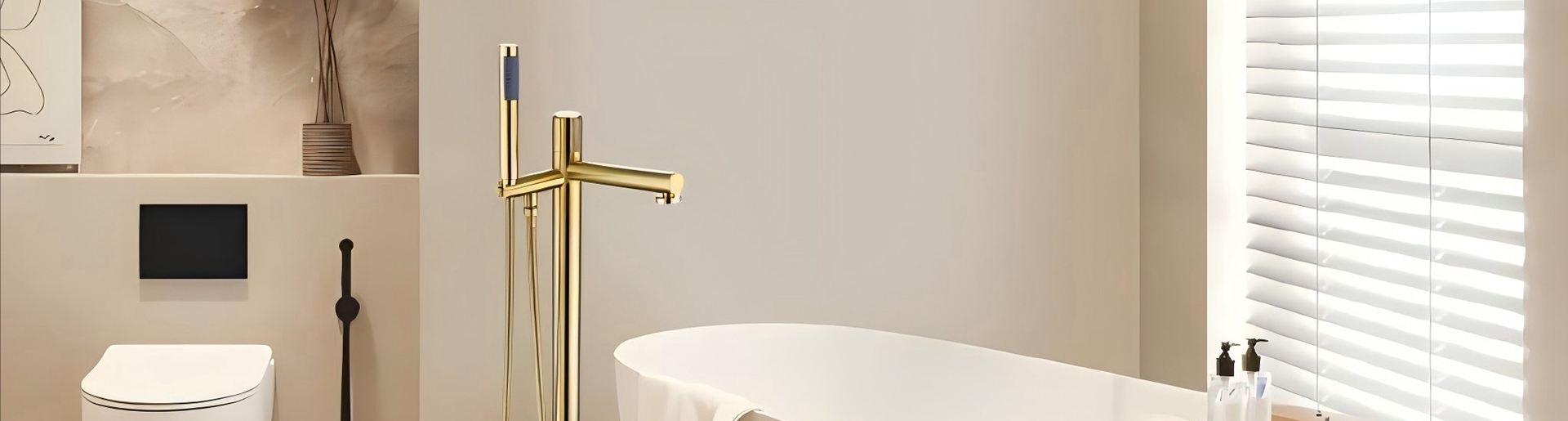
How to Choose a Deck Mounted Kitchen Faucet for Projects?
Selecting the right faucet for a project requires more than matching style with the sink. Performance, installation compatibility, certification, and long-term reliability all play a role in project success. A clear selection strategy helps avoid delays, reduces maintenance risks, and ensures consistency across multiple units. This article outlines a practical project faucet specification guide based on real manufacturing and engineering considerations.
Table of Contents
- Understand the installation structure first
- Match faucet design with project positioning
- Focus on functional configuration
- Evaluate material and surface treatment
- Confirm certification and compliance
- Compare supplier capability and production stability
- Key selection checklist
- Final selection depends on long-term performance
Understand the installation structure first
The first step is confirming the Kitchen Faucet installation type. A deck mounted setup means the faucet is installed directly on the sink or countertop through pre-drilled holes, typically 32–35 mm in diameter. This configuration is widely used due to its stability and compatibility with most kitchen layouts.
When selecting a deck mounted kitchen faucet, ensure that the mounting hole spacing, thickness of the countertop, and fixing hardware match the project requirements. Incorrect installation matching can lead to leakage, instability, or extended installation time on site.
Match faucet design with project positioning
Design is not only about appearance. It should align with the overall positioning of the project. Residential kitchens, rental units, and commercial kitchens often require different design priorities.
For modern projects, matte black or brushed finishes are widely specified due to their resistance to fingerprints and scratches. For high-traffic environments, a simpler structure with fewer moving parts may improve long-term reliability. When planning how to choose deck mounted kitchen faucet, balancing visual consistency and durability is critical.
Focus on functional configuration
Functionality should be evaluated based on real usage scenarios. For example, a sink pull down faucet offers extended reach and flexible cleaning performance, making it suitable for larger sinks or multi-tasking kitchens.
Check whether the faucet includes a high-quality ceramic cartridge rated for at least 500,000 cycles. This ensures smooth operation and reduces the risk of leakage over time. Water flow should meet regional standards. In the U.S., kitchen faucets are generally limited to 2.2 gallons per minute at 60 psi, according to EPA guidelines.
Evaluate material and surface treatment
Material selection directly affects durability and compliance. Brass and stainless steel are commonly used for their corrosion resistance and safety in drinking water systems. For projects targeting the U.S. market, lead-free compliance requires a maximum of 0.25 percent lead content in wetted surfaces, as defined by EPA regulations.
Surface treatment is equally important. Electroplating or powder coating should pass salt spray testing, typically 24 hours or more under ASTM B117 standards. This ensures that the faucet maintains its appearance and performance even in humid kitchen environments.
Confirm certification and compliance
Certification is a key requirement in project procurement. Faucets should comply with ASME A112.18.1 and CSA B125.1 standards for mechanical performance. Drinking water safety is verified through NSF/ANSI/CAN 61, while NSF/ANSI/CAN 372 confirms lead-free compliance.
These certifications ensure that the faucet can enter regulated markets and meet inspection requirements. A supplier familiar with these standards can help streamline documentation and avoid delays during project approval.
Compare supplier capability and production stability
Choosing the best deck mount faucet for projects is closely tied to the supplier’s manufacturing capability. AIDIER operates with integrated production resources, including plating, hose production, and in-house testing facilities. This structure allows better control over quality consistency, finish stability, and delivery timelines.
With over 20 years of manufacturing experience and a complete supply chain setup, AIDIER supports both standard models and customized development. This is particularly useful for projects requiring consistent finishes across multiple product categories.
Key selection checklist
| Factor | What to Check | Why It Matters |
|---|---|---|
| Installation compatibility | Hole size, mounting thickness, fixing system | Ensures smooth on-site installation |
| Functional design | Pull-down, swivel, flow control | Matches usage requirements |
| Material compliance | Lead-free brass or stainless steel | Meets safety regulations |
| Surface durability | Salt spray resistance 24h+ | Extends product lifespan |
| Certification | ASME, NSF standards | Supports market entry |
| Production capacity | Factory integration and QC system | Ensures batch consistency |
Final selection depends on long-term performance
A project faucet is not a one-time purchase. It must perform consistently across hundreds or thousands of installations. Stability in materials, structure, and finishing determines whether the product can maintain quality over time.
A well-selected faucet combines correct installation type, verified compliance, durable materials, and a supplier with strong manufacturing control. This approach reduces risk and ensures the faucet performs as expected throughout its lifecycle.