


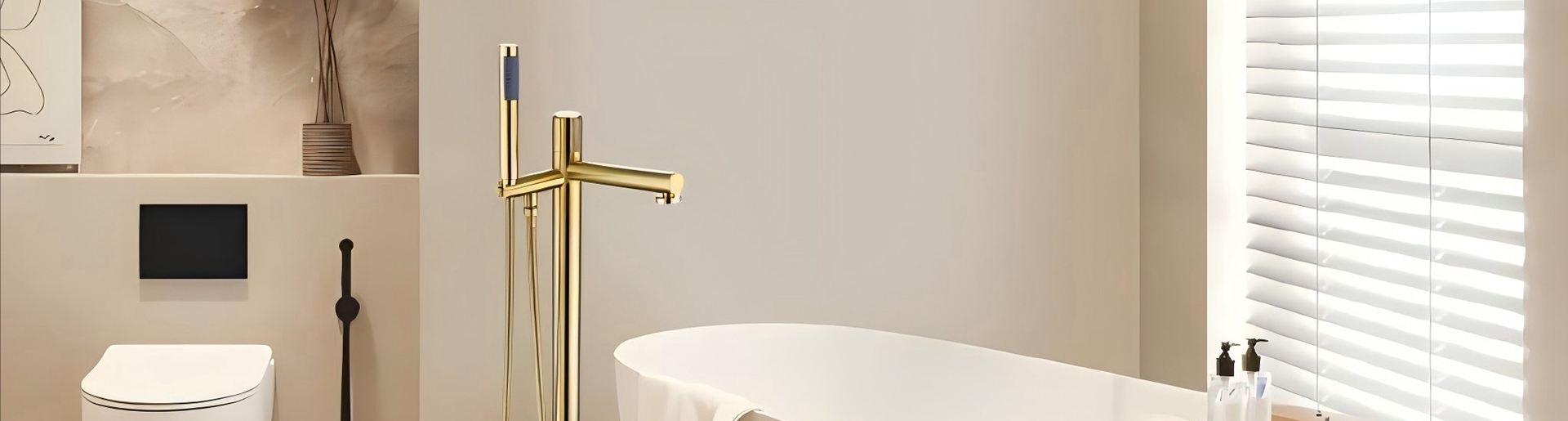
How To Design A Custom Faucet Product?
Custom faucet design process should begin with market use, not only with shape. A faucet for rental apartments, hotel bathrooms, retail shelves, kitchen projects, or private-label wholesale programs will need different structure, finish, flow rate, packaging, and cost control. Good OEM faucet product development turns an idea into a faucet that can be produced steadily, installed smoothly, and sold with fewer after-sales risks.
Table of Contents
Define The Market Before Drawing
The first step is confirming where the faucet will be used. Kitchen Faucets may need stronger flow, pull-out hoses, taller spouts, and splash control. Bathroom Faucets often focus on basin matching, finish consistency, water saving, and compact installation.
For flow planning, WaterSense bathroom faucet performance commonly uses 1.5 gpm at 60 psi, while many kitchen faucet references use 2.2 gpm at 60 psi. These figures help engineering teams set a practical flow target before sample testing.
Turn Style Into Engineering Details
Faucet design engineering connects appearance with real production. A slim body may look modern, but it still needs enough inner water passage. A tall spout may look premium, but the base must stay stable after installation. A colored finish may improve market value, but packaging must protect the surface during shipping.
| Design Stage | Main Decision | Buyer Value |
|---|---|---|
| Concept | Style, use scene, price level | Clear market direction |
| Structure | Body, cartridge, hose, aerator | Stable function |
| Finish | Chrome, brushed, matte, PVD | Visual positioning |
| Testing | Flow, leakage, pressure | Lower complaint risk |
| Packaging | Inner support, carton strength | Safer export delivery |
Sample Development Should Be Controlled
When buyers ask how to design custom faucet products, sample control is often the most important part. The first sample should not only be checked by appearance. It should be tested for handle movement, water flow, thread connection, hose length, surface quality, installation fit, and packaging protection.
Small changes during sampling can prevent large problems later. Spout reach, base diameter, aerator type, and cartridge feel should be confirmed before opening larger production orders.
Make The Product Easy To Produce
A custom faucet that is too difficult to assemble may cause unstable quality in mass production. Good design should reduce unnecessary parts, avoid hidden assembly risks, and make inspection easier. This is especially important for OEM faucet product development because repeat orders need consistent quality.
Aidier can help review custom faucet ideas from product structure, finish selection, testing method, and packaging arrangement. This makes the faucet product development guide more practical for real orders.
Build Customization Around Long-Term Sales
Custom design should not only satisfy one order. It should create a faucet that can be sold repeatedly, displayed clearly, and maintained easily. When design, engineering, testing, and supply planning work together, buyers gain a product that fits their market instead of a sample that only looks good once.