


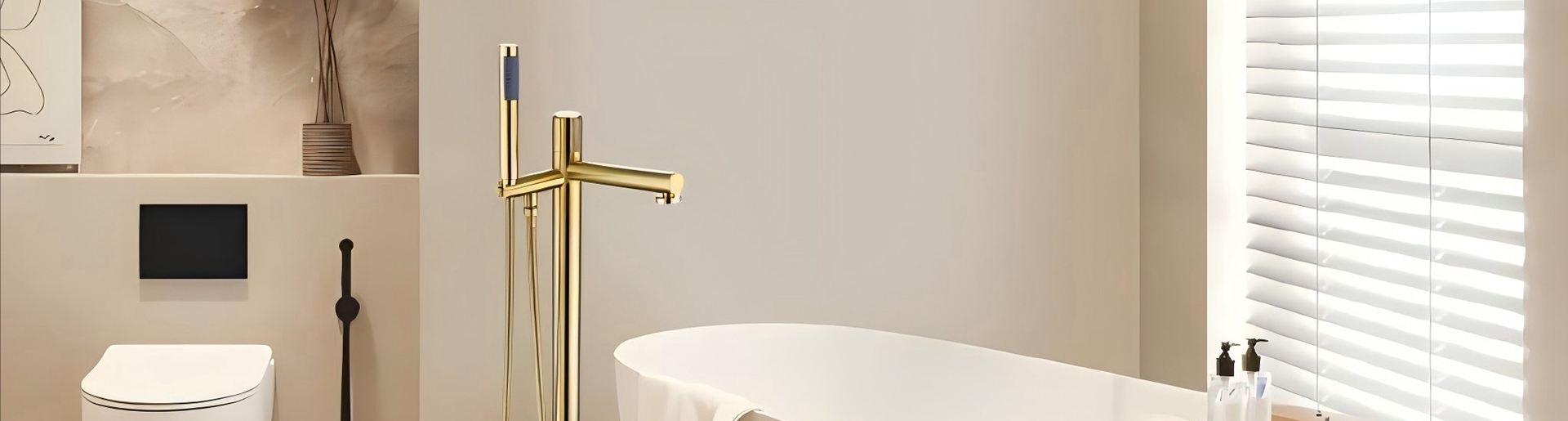
What Makes a Faucet High Quality?
High quality faucet standard work begins with the parts that users cannot easily see. A faucet may look good in photos, but real quality depends on material, casting, machining, cartridge performance, coating stability, sealing structure, water flow, and final testing. A good faucet should feel smooth, install correctly, resist corrosion, and perform consistently after long-term daily use.
Aidier produces Bathroom Faucets, Kitchen Faucets, Shower Systems, and accessories, so quality must be controlled across different structures and applications. A basin faucet, kitchen mixer, and shower system each require different inspection focus.
Table of Contents
Material Quality Builds the Foundation
Premium faucet manufacturing criteria start with material selection. Brass is commonly used for faucet bodies because it supports stable machining and strong surface finishing. Stainless steel is valued for corrosion resistance and a clean modern appearance. Zinc alloy may be used in selected parts, but water-contact areas need careful control.
A high-quality faucet should have stable body structure, clean internal waterways, accurate threads, and suitable wall thickness. Poor material control may lead to cracking, weak plating adhesion, leakage, or shortened service life.
Buyers should ask for material information, weight range, component structure, and whether the selected material matches the target market requirement.
Cartridge Performance Affects Daily Experience
The cartridge is one of the most important parts of a faucet. It controls water flow, temperature mixing, handle smoothness, and sealing. A poor cartridge may cause dripping, stiff operation, unstable temperature control, or early failure.
Industry faucet quality benchmarks often include repeated open-and-close cycle testing. Many quality programs test cartridges through thousands of cycles to evaluate durability. For high-usage applications, cartridge quality should be treated as a key purchasing point, not a small accessory.
| Quality Area | What To Check | Result For Users |
|---|---|---|
| Body material | Composition, casting, machining | Strong structure |
| Cartridge | Smooth operation, cycle life | Stable control |
| Aerator | Flow stability, splash control | Better water stream |
| Finish | Adhesion, corrosion resistance | Long-term appearance |
| Assembly | Thread fit, sealing | Easier installation |
| Testing | Leakage and pressure checks | Lower failure rate |
Surface Finish Must Be Stable
A faucet finish does more than create color. It protects the product against moisture, cleaning agents, fingerprints, and daily wear. Chrome, matte black, brushed nickel, brushed gold, and other finishes must be processed with stable surface preparation.
Electroplating quality depends on polishing, cleaning, plating thickness, and inspection. Coated finishes need strong adhesion and controlled curing conditions. Salt spray testing is often used in the sanitary ware industry to evaluate corrosion resistance, especially for humid bathrooms and kitchen environments.
High quality faucet features should include clean edges, even color, no obvious pits, no peeling risk, and good resistance to normal cleaning.
Precision Machining Improves Installation
A faucet with poor machining may cause installation problems even when the design looks correct. Thread accuracy, hole alignment, handle fit, spout rotation, and sealing surface flatness all affect installation.
For wholesale and project supply, installation efficiency matters. Installers do not want to spend extra time adjusting loose parts or solving leakage caused by poor fitting. Accurate machining helps reduce labor complaints and after-sales pressure.
This is why identify quality faucet guide work should include sample installation checks before large orders.
Water Flow Should Match Application
A high-quality faucet should provide stable water flow without excessive splash or noise. kitchen faucets need practical flow for washing, while bathroom faucets should balance comfort and water efficiency. Aerator quality can affect stream shape, noise control, and water feeling.
Different markets may have different flow requirements. Buyers should confirm whether the product flow rate is suitable for local rules, project requirements, or retail expectations. A faucet with attractive design but poor water behavior may still create user complaints.
Leakage Testing Is Essential
Every faucet should pass leakage testing before shipment. Testing may include air pressure testing, water pressure testing, or function testing depending on product type. This is especially important for pull-down kitchen faucets, shower mixers, and multi-component products.
Leakage is one of the most damaging quality problems because it can lead to installation failure, customer returns, property damage concerns, and brand reputation loss. Reliable testing reduces this risk before products leave the factory.
Packaging Also Reflects Quality
Packaging is part of product quality. A faucet with a beautiful finish can be damaged during shipping if protection is weak. Inner bags, foam, molded inserts, accessory bags, and carton strength should match the product weight and surface finish.
For matte black or brushed gold faucets, surface protection becomes more important because visible scratches can affect selling value. High quality faucet standard work should include both product inspection and packaging inspection.
Final Thoughts
What makes a faucet high quality is the combination of material, cartridge, finish, machining, water flow, assembly, leakage testing, and packaging. Buyers should not judge quality by appearance alone. A reliable faucet should perform well after installation, remain stable in repeated use, and keep a consistent finish across bulk orders. Quality is built through every production step, not added at the final inspection stage.