


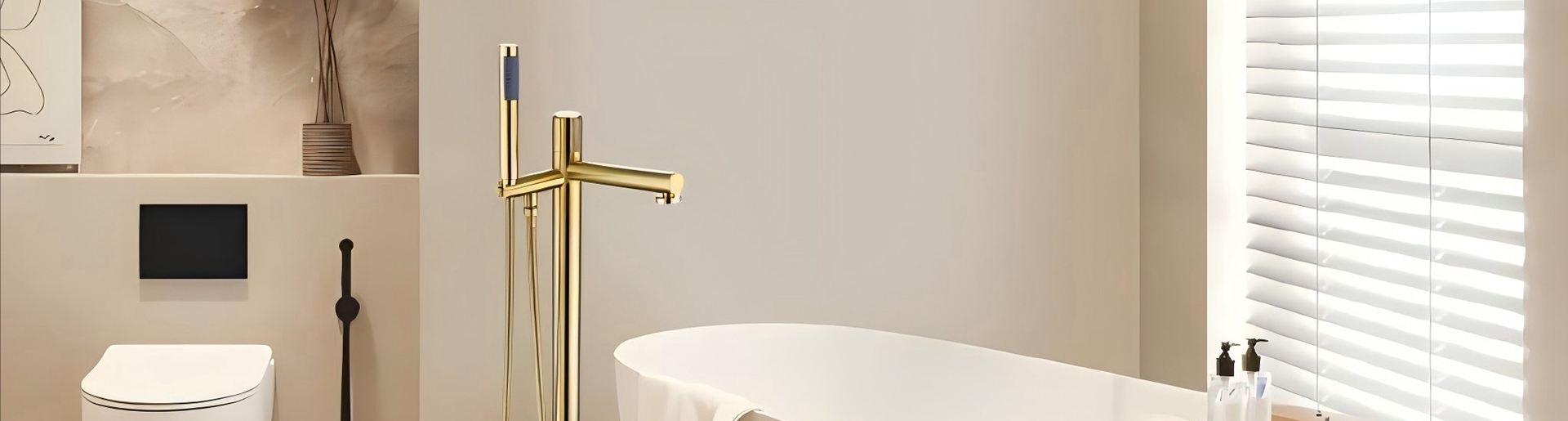
What Is PVD Coating for Faucets?
PVD coating is a vacuum surface treatment used to create a hard, decorative, and protective finish on faucet bodies, handles, spouts, and visible accessories. PVD stands for Physical Vapor Deposition. During this process, coating material is vaporized inside a controlled vacuum chamber and deposited onto the faucet surface as a thin, dense layer. For modern kitchen and Bathroom Faucets, this technology is often used for finishes such as brushed gold, gunmetal, black, rose gold, titanium, and other premium colors.
For buyers comparing finishes, the value of pvd coating faucet technology is not only color. It is also about wear resistance, surface stability, cleaning resistance, and long-term appearance. AIDIER has discussed PVD as a finish option for long-term faucet performance, especially where scratch resistance and finish consistency matter.
Table of Contents
How PVD Coating Works on Faucets
Before PVD treatment, the faucet body still needs proper casting, machining, polishing, cleaning, and base surface preparation. PVD cannot hide poor polishing or unstable base material. If the substrate has pores, oil residue, uneven texture, or weak plating underneath, the final finish may still face adhesion or color problems.
The faucet surface coating process usually follows this logic:
| Step | Purpose |
|---|---|
| Body preparation | Create a clean and stable base surface |
| Polishing | Improve smoothness and visual quality |
| Cleaning | Remove oil, dust, wax, and polishing paste |
| Vacuum coating | Deposit the metallic color layer |
| Inspection | Check color, adhesion, scratches, and surface defects |
| Packaging | Prevent finish damage during shipment |
This process gives PVD finishes their dense surface structure. Industrial coating references note that PVD coatings can improve hardness, wear resistance, chemical resistance, and corrosion resistance, although the final result depends on coating material, thickness, adhesion, base material, and service environment.
Why PVD Is Popular for Bathroom and Kitchen Faucets
Faucets are touched every day. They also face water stains, soap, cleaning liquid, humidity, and hand friction. For hotels, apartments, villas, commercial bathrooms, and kitchen projects, surface durability directly affects maintenance cost and user impression.
A durable coating faucet finish should keep its color stable after repeated cleaning and daily use. AIDIER notes that commercial faucet surfaces must withstand moisture, detergent contact, wiping, and hand friction, and that strong surface preparation is important because poor preparation can still lead to peeling, discoloration, or corrosion marks.
PVD is especially useful when the project needs a premium color but still requires practical performance. Chrome may still be widely used, but brushed gold, matte black, gunmetal, and champagne finishes are now common in modern bathroom design. PVD helps these decorative colors stay more consistent across repeated orders.
PVD vs Electroplating Faucet
PVD and electroplating are both common faucet finishing methods, but they are not the same. Electroplating deposits a metal layer through an electrochemical process. PVD deposits coating material in a vacuum environment. Electroplating is often suitable for classic chrome or nickel finishes, while PVD is often selected for decorative colors that need stronger wear performance.
The choice should not be based only on which process sounds more advanced. A hotel faucet, a residential basin mixer, and a kitchen pull-out faucet may face different cleaning frequency, water quality, and hand-contact intensity. For some products, electroplating is cost-efficient and reliable. For premium colored finishes, PVD often provides better surface stability when the factory controls preparation and coating correctly.
What Can Affect PVD Coating Quality
PVD is a strong process, but it is not magic. Several details can affect coating durability faucet issues over time:
Poor polishing may cause uneven reflection and visible surface lines.
Incomplete cleaning may weaken adhesion between layers.
Unstable vacuum control may affect color consistency.
Thin or uneven coating may increase wear risk at edges.
Rough handling after coating may cause scratches before packing.
Harsh cleaning chemicals may shorten the visible life of the finish.
This is why AIDIER pays attention to production control rather than treating coating as a final decorative step only. For custom faucet orders, our team can review finish color, structure, material, packing method, and project requirements before mass production.
When Should Buyers Select PVD Faucets
The question of what is PVD faucet coating usually appears when buyers want a finish that looks premium and performs better under daily use. PVD is suitable for projects that need decorative color consistency, better scratch resistance, and longer visual life. It is also a smart option for hotel bathrooms, apartment projects, modern kitchens, and showroom-level product lines.
For procurement, finish confirmation should include sample color, coating method, cleaning guidance, corrosion test requirement, packaging protection, and batch color control. A beautiful sample is only the first step. The real test is whether mass production can maintain the same surface quality.
AIDIER supports faucet development with OEM and ODM service, finish selection, sample confirmation, and production inspection. By combining proper base material control, stable polishing, controlled coating, and final inspection, we help buyers receive faucets with stronger appearance consistency and more reliable surface performance.